Software Architect & Consultant for AI, Cloud, Data & DevOps
I am Zareef Ahmed, a software architect and consultant. For over two decades I have designed, built, and modernized software systems, from PHP applications in the early 2000s to cloud platforms to, today, AI-assisted engineering and on-premise AI deployments. I wanted to be a writer, became a programmer to pay the bills, and discovered I had accidentally chosen a profession that was also my hobby. I have never done a tired day of work since.
The journey
My first program was a rose flower drawn in QBasic. Before that, my idea of programming was tweaking autoexec.bat files on MS-DOS, and honestly, in those days it was programming to me. From there the path ran through FoxPro, C, Perl and CGI, ASP, Java, and PHP, which anchored a long stretch of my career and earned me a Zend Certification, with C#, Ruby, Python, and Objective-C shipped along the way. But the journey never stopped at languages: it kept moving down into servers and deployments, and then out into cloud platforms and data systems, where it continues today.
In June 1998 a computer magazine introduced me to Red Hat Linux, and I became an open source believer overnight. That love of understanding systems from the terminal up never left; it made me the kind of developer who could also deploy, tune, and operate what he built, long before anyone called that DevOps.
The lesson from all those languages and systems: the language matters far less than the approach. Patterns, architecture, and judgment are what survive every platform shift. I have been through several shifts now, from bare metal to virtualization to cloud to big data. The AI era is the latest one, and it is the reason this site looks the way it does today.
The architect
Programming is rarely a solitary act. You are building a system to solve a problem, and someone has to hold the whole picture: the architecture, the trade-offs, the deployment, the team. That became my job title over time, but it was always my instinct.
I have designed systems for medical practices, jewelry businesses, SaaS products, and white-label platforms, on stacks from a hand-rolled MVC framework (every architect of my generation built one) to Zend, CakePHP, Symfony, and Yii, and later on AWS, Google Cloud, and Microsoft Azure. Today most of my architecture work is modernization: taking systems that were sound in their decade and making them sound for this one.
And yes, I have worked with a top cloud service provider, so I really know what is necessary for your stack and what is necessary only for your account manager’s dashboard. That world, seen from the inside and told without a filter, is exactly what my book Diary of a Solutions Architect is about.
The AI practitioner
Since the arrival of generative AI, I have focused on two things. First, helping engineering teams adopt AI-assisted development in a way that actually holds up in production, with the workflows, review discipline, and quality control that make tools like Claude Code and GitHub Copilot an asset instead of a liability. Second, my specialty: offline, on-premise AI deployments, where organizations run generative AI entirely inside their own infrastructure and keep full control of their code and data.
The offline AI focus was born of necessity, not theory. When I started using AI tools on my own existing projects, the three problems that hit me immediately were security, performance, and privacy: code and data leaving the network, unpredictable latency, and no control over where anything went. Solving those problems for myself turned into solving them for others, and it became the specialty it is today.
I document this work continuously: on the AI section of the blog, on the AI & Code Experiments page, and on my YouTube channel, where I record real working sessions rather than polished demos. The code itself lives on GitHub: github.com/zareefahmed holds my projects and experiments, and github.com/dbminutes holds the material from my database and web technology workshops. Some of it ships as packages on npm, including ailane, a tool that inspects your hardware and tells you which local AI models it can run.
The author
Writing was the original dream, and it started early. I was writing from my school days and got published in many newspapers of that time. Programming was the detour that became the destination. The dream did not die, it just waited. I have now published three books for programmers and solutions architects: Diary of a Solutions Architect, Bed Time Stories for Programmers and Solutions Architects, and You Are the Quality Control, a practical guide to secure software in the age of AI-assisted development. This blog has been running since 2004, and the writing habit shows no signs of stopping. My books and research are indexed under my ORCID iD, 0000-0001-8691-9277.
The teacher
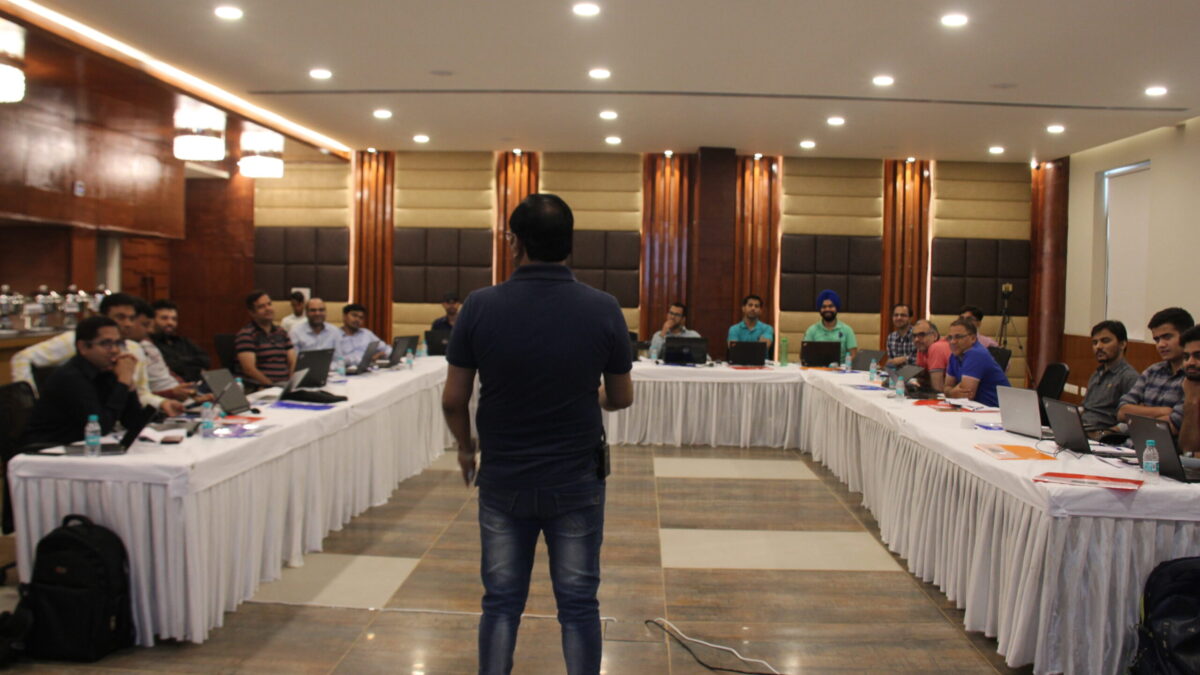
My teaching started where the work was. Inside the companies I worked for, I ran onboarding sessions to get newly hired engineers productive quickly, and I helped established teams pick up whatever the next project demanded, whether that was a new language, a new tool, or a new cloud. I enjoyed it enough that it spilled into my weekends, and over the years that became a steady stream of professional training assignments alongside my full time role: multi-day corporate workshops, including the AWS workshops I ran in Delhi, and seminars for Java programmers. That work has taken me into teams at HCL, IBM, Nokia, BCG, Mindtree, and the Asia Pacific University of Technology & Innovation (APU), along with many other clients I cannot name here.
Teaching is how I test my own understanding: if I cannot explain a system to a room full of skeptical engineers, I do not really understand it yet.
That is the professional story. If any part of it connects with a problem you are working on, I would like to hear about it.